The French Revolutionary and Napoleonic Wars exacted an awful human toll. As one British publication asserted thirteen years after Waterloo: ‘There are few families in the land who have not one or more relatives sleeping in a soldier’s grave’.
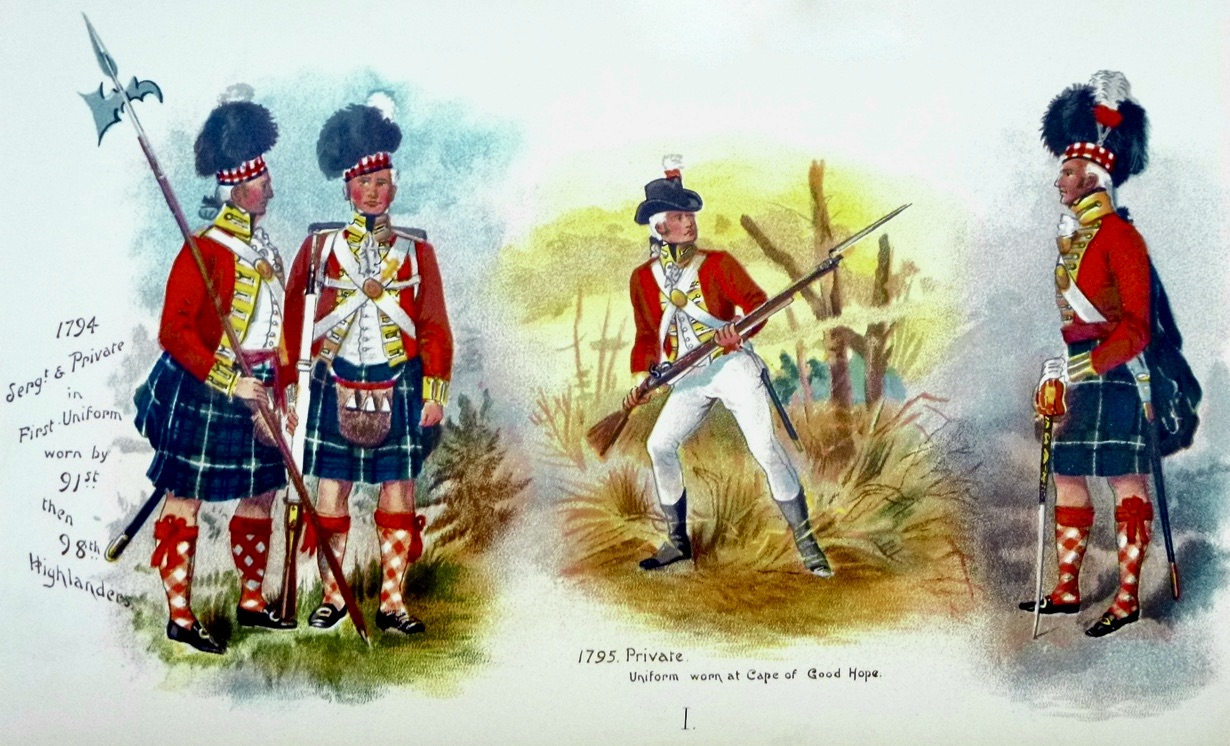
While the letters of officers and their families provide voluminous documentation of the pain of separation and bereavement, accessing the experiences of rank-and-file soldiers and their kin is altogether more difficult. The autobiography of John MacKinnon, a clerk and weaver who grew up in wartime Glasgow, provides a moving description of the last time he saw his uncle, James Moodie, an unmarried grenadier in the 91st Highland Regiment, in 1806 or 1807. Moodie had enlisted in the army, much to the disappointment of his mother, after an unsatisfactory stint as an apprentice stocking weaver. Continuing to make hose as a regimental tradesman, he survived the gruelling retreat to Corunna in 1809 but died of illness during the disastrous Walcheren expedition later that year.
MacKinnon’s account underscores the length of time servicemen spent apart from their families, but also hints at the importance of the exchange of letters for maintaining connections with home. Moodie’s attempt to test whether his sister, John MacKinnon’s mother, would recognize him after a dozen years’ separation echoes similar tricks recounted by veteran soldiers in their memoirs. It is also fascinating to learn that the soldier’s arrears of pay were later used to purchase a mourning ring. Born in 1802, MacKinnon would have been very young at the time of Moodie’s furlough; his recollections likely reflect family stories repeated after the grenadier’s death as much as the first-hand memories of a four or five-year-old boy.
[A]n uncle of mine, James Moodie, a soldier in the Grenadier Company of the 91st Regiment, got a furlough, and came to see us. My parents had not mentioned the change of residence in their letters, and he came to the house in Cheapside [Street, Glasgow]; one of the neighbours called me from among the children, and told me to take the soldier home to my father’s. The 91st at that time wore the kilt, and my uncle was a tall good looking man, but I did not at the time know that he was any relation to me; he took me by the hand, and I led him away round to the house. He thought that my mother would not know him, as she had not seen him for twelve years, and he meant to pass himself off for an acquaintance of her brother from the regiment; but as soon as he entered, and took off his bonnet, she knew him, and seized him by the hand. He had been seen by Young’s people going up the street leading me by the hand, and he being tall, his bonnet and feathers were seen over the kirkyard wall going down towards the house. James Young’s father immediately came round to see who it was, and during the time that his furlough lasted, they made his stay as pleasant as possible.
We never saw him again. He had enlisted in the Argyleshire Regiment [later renumbered as the 91st] in 1794, and was through all the campaigns till 1809. He got his furlough in 1807. He was with the army during the retreat to Corunna, and wrote an account of the retreat in a series of letters after the regiment returned to Britain. His regiment was sent out to Walcheren in Holland in 1809; he was attacked with fever & ague, but got better, he went to his duty too soon, had a relapse and died there; a great portion of the Army died in that unwholesome place. There was a guinea of arrears due to him when he died, and it was sent home. Half a guinea was sent to my aunt in Lanark, and my father put as much to the other half guinea, as bought a fine gold ring to [sic] my mother, with my uncle’s name engraved on it.
MacKinnon provides further information on Moodie’s visit in another handwritten account, entitled ‘My Schools and School Masters: or The Story of My Education’. This version contains a fuller description of the soldier’s warm welcome in Glasgow, his emotional final parting with MacKinnon’s mother, and a less enjoyable sojourn with his other sister in Lanark.
Towards the end of that year [1806], we had a visit from my uncle James Moodie. The 91st Regiment had returned to Britain, and when furloughs were being granted to the men, it came to his turn, and he thought he would go north, and see how his sisters were. [Moodie’s parents had both died by this time.]
He knew that my mother was married, and he had heard of my father from some of the Fencible men who had entered the 91st Regiment after the Fencibles were broke [i.e. disbanded]. My parents had not mentioned to my uncle their removal from Cheapside to Piccadilly Street [in Glasgow], lest he might think the one place distant from the other, whereas they were next streets to each other, and the post man knew our new residence and brought the letters quite regularly. When my uncle came to Cheapside Street… he was informed that my parents had removed to the next street, but as I happened at the time to be in Cheapside Street engaged with my former play fellows, I was called forward, and told to take the soldier round to my father’s. I got hold of the soldier’s hand, and took him round to my father’s. He wanted to pass himself off as a soldier of the regiment who had called at her brother’s request, but he had not spoken many words when my mother recognised him, and seized his hand, exclaiming “You are Jamie Moodie my brother.” They had not seen each other for twelve years. My father was sent for, and he gave him a hearty welcome, and we were all delighted that Uncle James had come. When it became known that a brother of my mother’s had come home on furlough from the army, the neighbours and our acquaintances were all anxious to see him and hear of his adventures during the twelve years that he had been a soldier. My uncle was treated with the greatest kindness during the time that he stopt with us, not only by ourselves, but by our acquaintances. He was shewn [sic] every place about the town that was thought worth seeing, and on all these occasions he was not allowed to be at any expense, so as that he might reserve the pay that he had to carry him back to the regiment. My uncle was well liked in the regiment, for he was of an open, frank disposition.
He passed the most time of his furlough with us, and as the town of Lanark lay between Glasgow and the place where the regiment lay, he went to pass the remainder of the time with my aunt, as he would be so far on the way. Before leaving he made one request of my mother, and that was that if she had another son, she would call him by his name; this was promised at once.
When he went away, my parents accompanied him to the end of Glasgow Green, and they bade each other farewell. He had only gone a few steps, when he came back, and took mother’s hand, and kissed her, saying perhaps they might never again see each other, and then parted.
They never met again; he died of fever and ague at Walcheren in Holland.
During his stay in Lanark, my aunt’s husband John Watson died, and she was left a widow with one son about my own age. He had not the same pleasure in Lanark as he had with us: my aunt’s disagreeable temper caused words between them, and my uncle wrote to us after he had rejoined the regiment, regretting that he had left us to go to Lanark.
Source: Glasgow City Archives, TD743, John MacKinnon papers, autobiography, pp. 10-11, 26, and ‘My Schools and School Masters: or The Story of My Education’, pp. 8-10, 27-30.
 1812 and all that