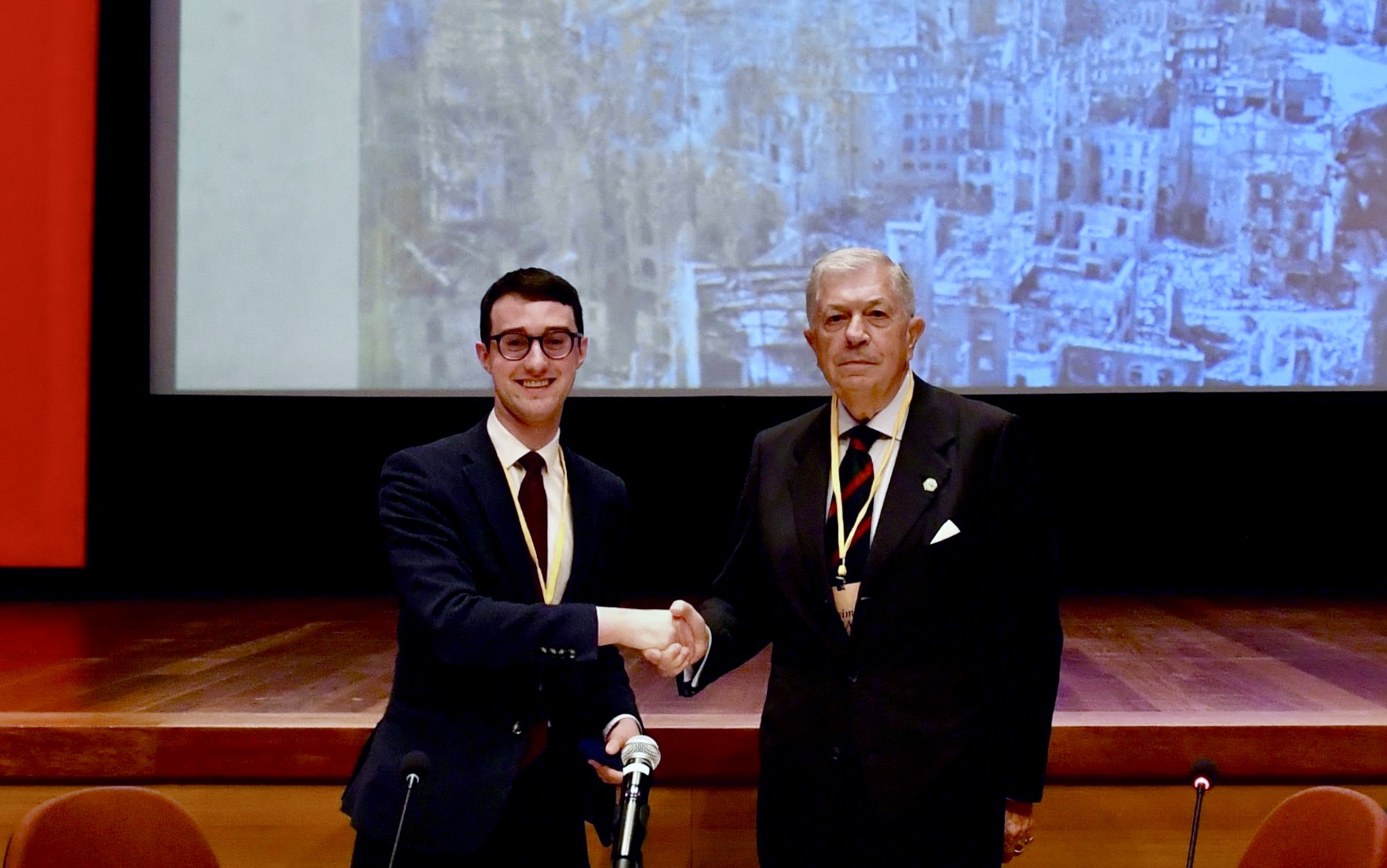
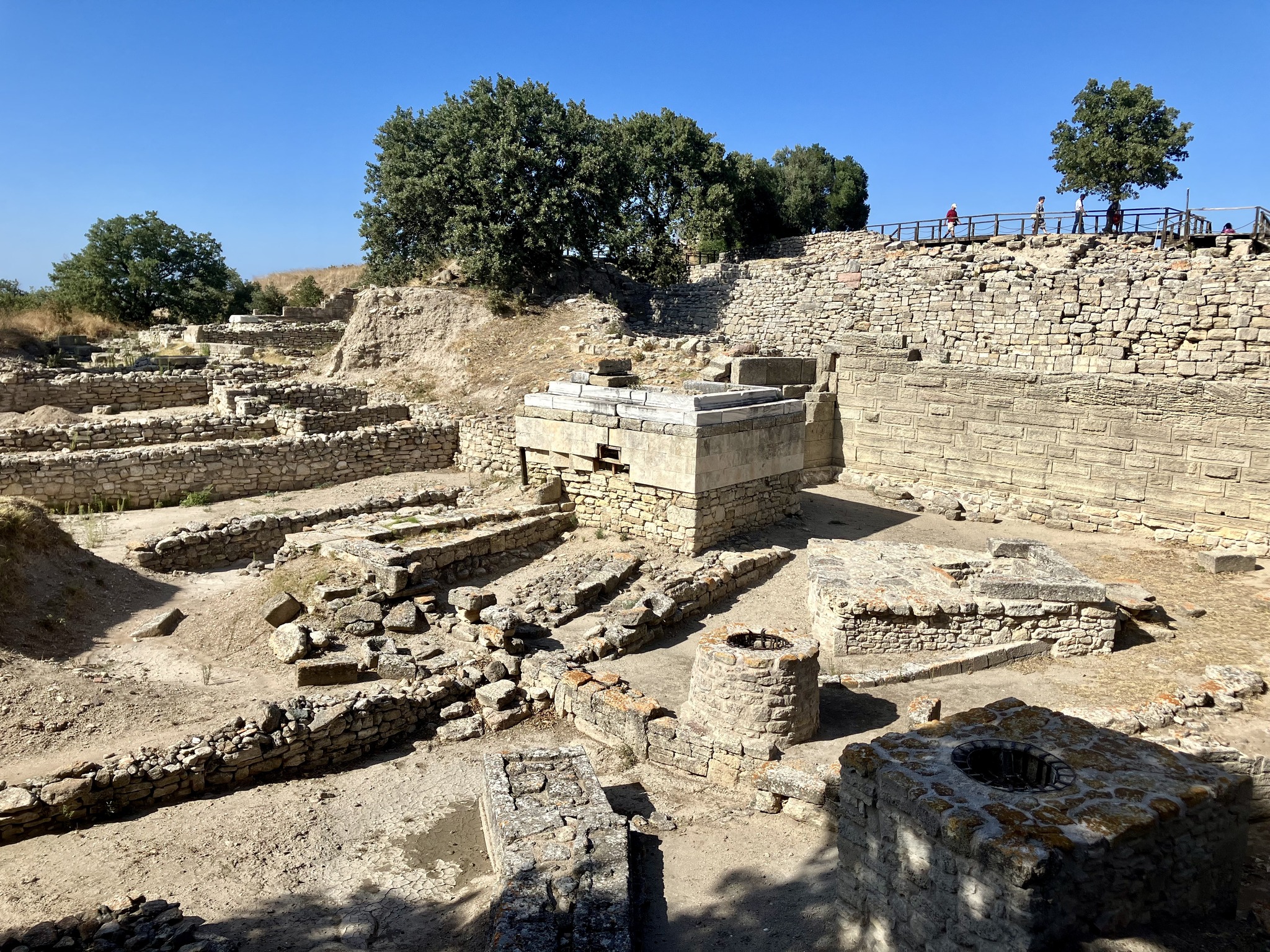
Earlier this month I attended the 48th congress of the International Commission for Military History in Istanbul, Turkey. I received the André Corvisier Prize, an annual award for the best PhD thesis in military history, and delivered a plenary address on my research. Besides attending the academic proceedings, I had the chance to explore the ancient city of Istanbul and visit Troy and Gallipoli as part of a post-conference tour. The experience was unforgettable, and I am grateful for the hospitality of the ICMH and the conference’s hosts at the National Defence University of Turkey.
I recently enjoyed reading The Long View: Why We Need to Transform How the World Sees Time. Through a thought-provoking blend of history, science, and philosophy, BBC journalist Richard Fisher advocates for the benefits of long-term thinking by reflecting on the ways that our ancestors perceived time. I’ll be interviewing the author at the annual Chelsea History Festival at the National Army Museum on Friday, 29 September at 2pm. Tickets are still available on the Chelsea History Festival website: https://chelseahistoryfestival.com/events/long-view/
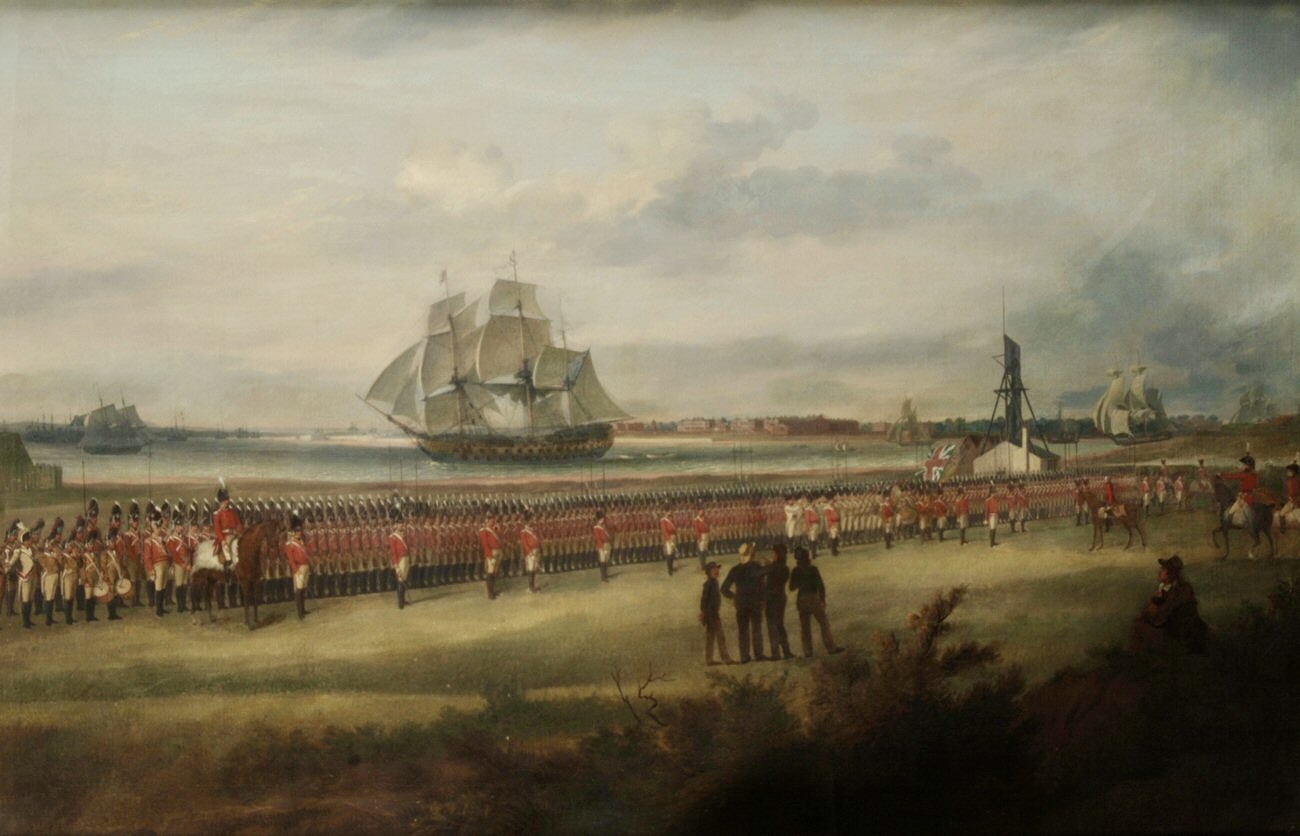
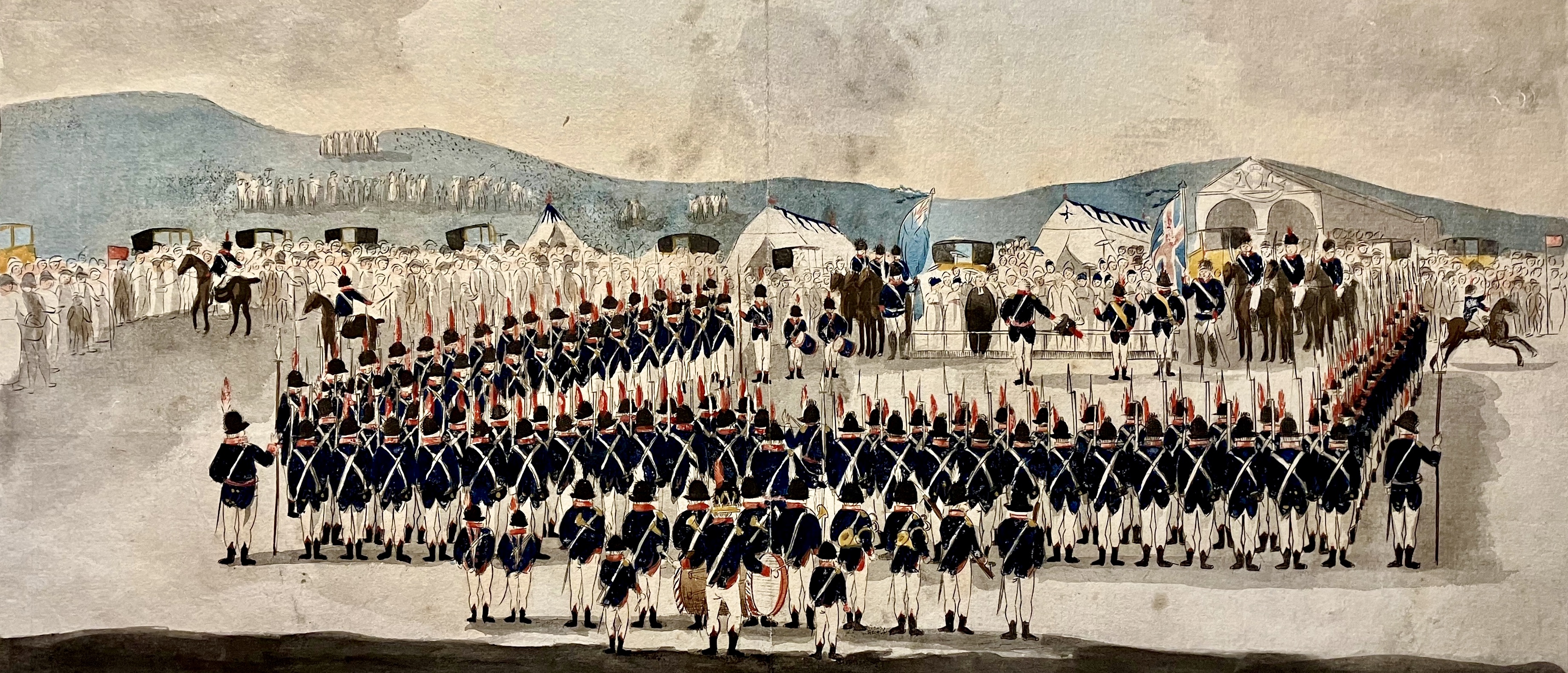
R. Livesay, ‘The Worcestershire Regiment [of Militia], commanded by Colonel Newport, being reviewed by Major-General Whitelocke on Southsea Common, October 14th, 1800’ (Portsmouth Museums)
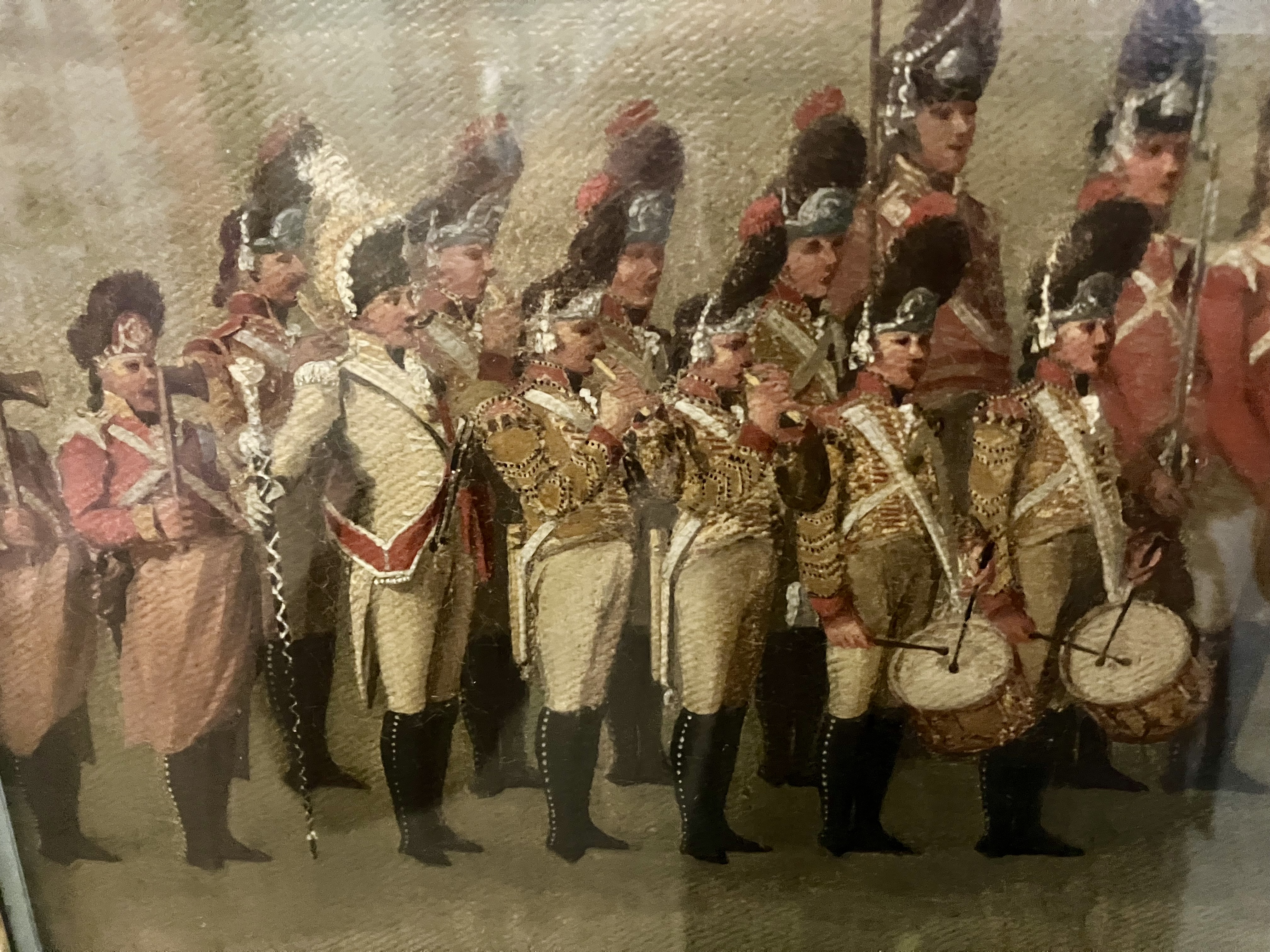
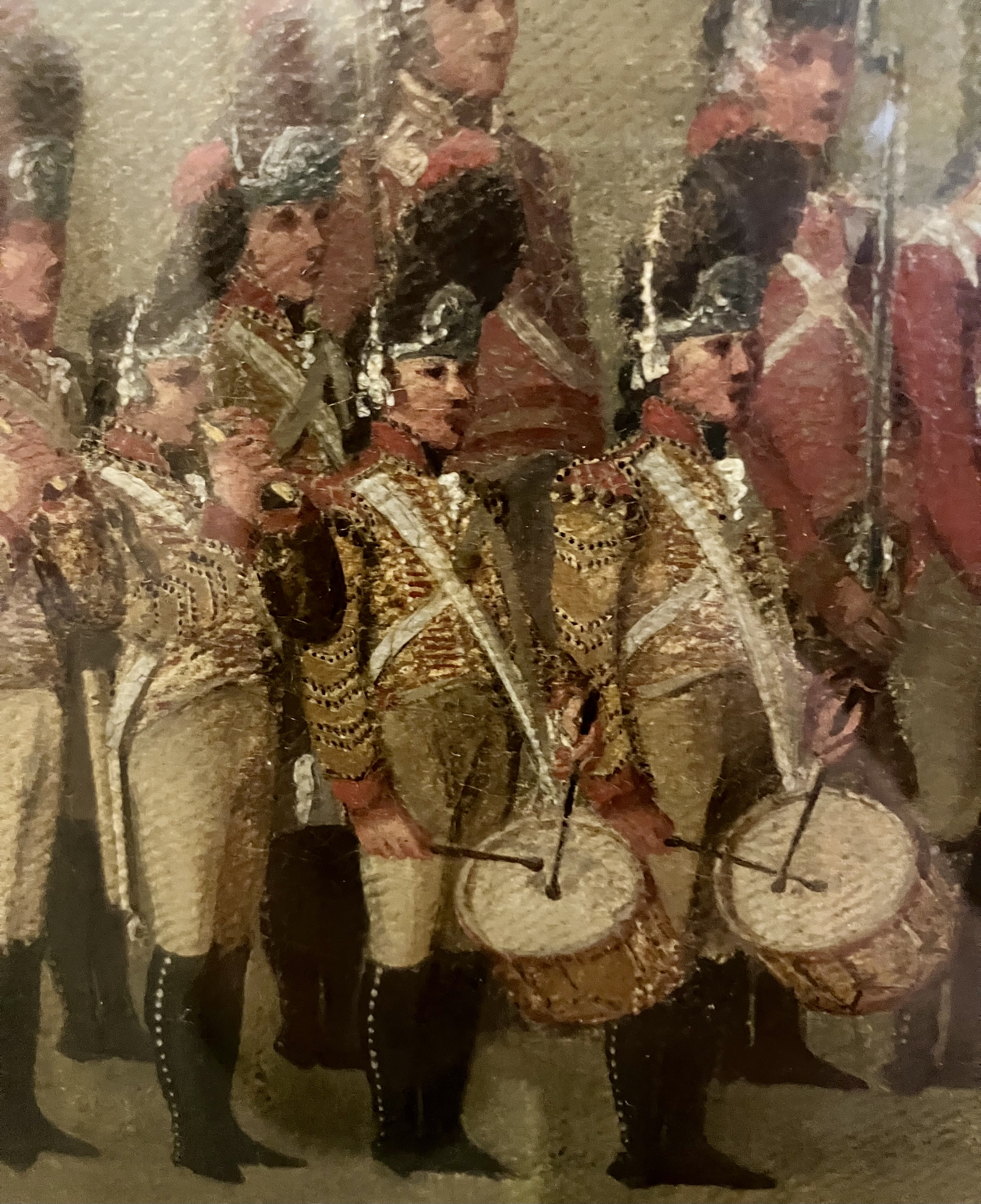
The Portsmouth Museum and Art Gallery is home to a fine depiction of a review of the Worcestershire Militia by Richard Livesay. The painting shows Major-General John Whitelocke, who later led a British army to ignominious defeat in South America, inspecting the corps on Southsea Common in October 1800 during the French Revolutionary War. A rare portrayal of an entire regiment drawn up in line, the artwork is of special interest to me on account of its detailed renderings of drummers and band musicians assembled on parade. Although the Reverend Percy Sumner published a brief description of the painting in the Journal of the Society for Army Historical Research in 1946, a recent visit to the museum gave me the opportunity to more closely inspect and photograph the canvas.
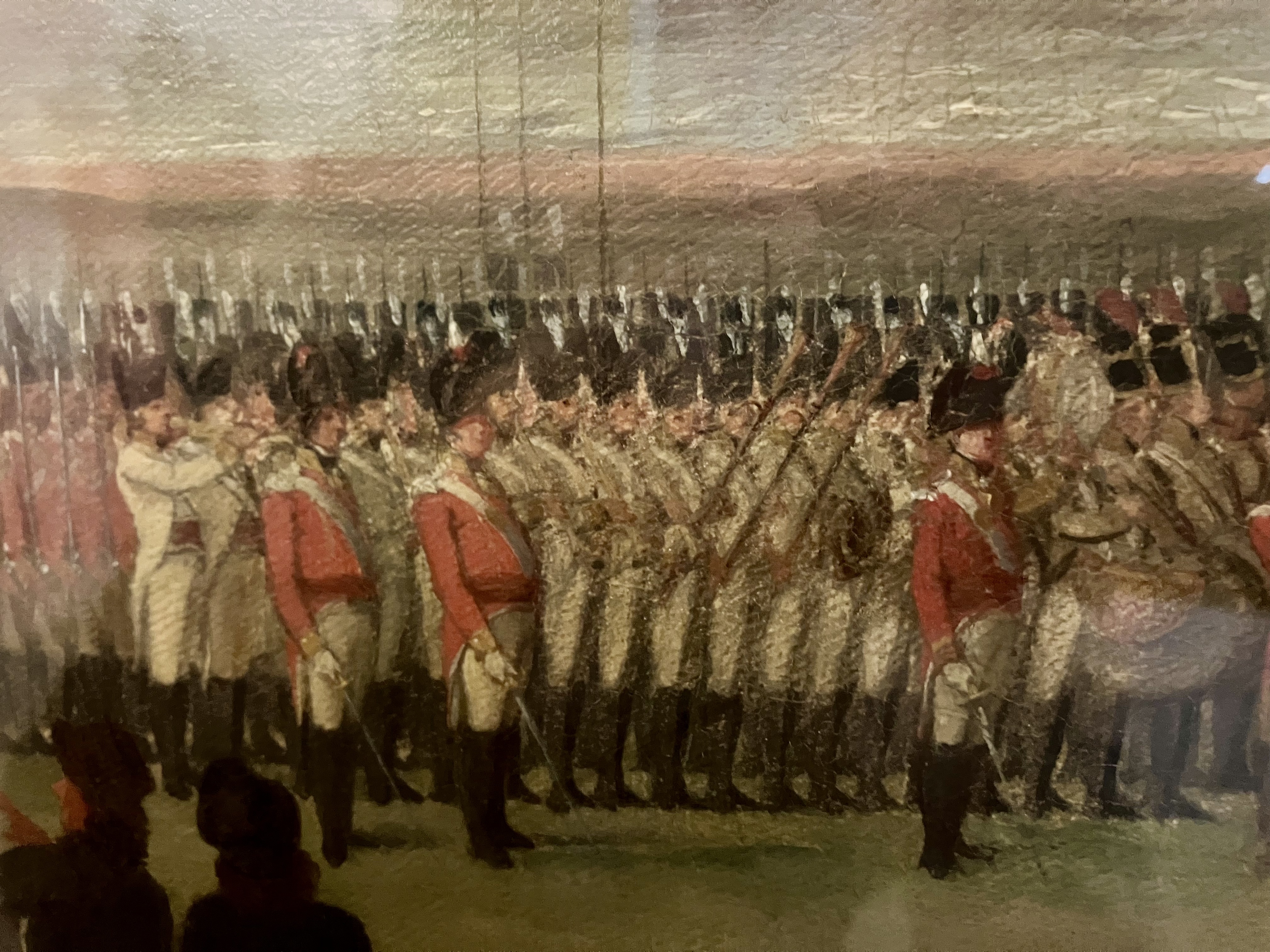
Livesay’s work neatly illustrates the visibility (to say nothing of the audibility) of regimental instrumentalists on parade. Although Dundas’s Rules and Regulations dictated that drummers and band musicians should form in the rear of infantry battalions when in close order, in open order the band was to be conspicuously positioned in front of the centre of the line, just behind the colours. The drummers were arrayed on both flanks ‘in order to make more show’, as the regulations put it. Livesay depicts just such a deployment, showing four fifers, four drummers and a drum-major on the extreme right of the line, flanked by axe-wielding pioneers on one side and the grenadier company on the other. Other drummers and fifers are deployed on the far left, although these far-away figures are harder to make out. The band in the centre appears to comprise some twenty performers – well in excess of the number officially permitted – and includes instruments such as bassoons, horns and the S-shaped serpent, not to mention a kettle drum and a bass drum. The painter depicts the band and the corps of drums playing and beating while officers and men salute the reviewing officer with their swords and muskets.
The Worcestershire Militia band (detail)
Drummers and band musicians were set apart from other soldiers not just by their functions and position on parade but also by their dress, which was especially splendid and typically of a different hue than that of the rank and file. Musicians’ clothing was not officially regulated, yet bandsmen tended to wear white uniforms; infantry drummers generally donned coats of their regiment’s facing colour – yellow, in this case. The drummers in Livesay’s painting, like the elite grenadiers and pioneers, wear large bearskin caps. Their coats are embellished with chevrons of distinctive polychromatic lace on the arms and what appears to be red hussar braid – an affectation normally associated with cavalry rather than infantry – down the front. Nor does the drum-major’s finery disappoint. Clad in a uniform which is buff or white rather than yellow, he bears his customary mace, sports a red cloth baldric (shoulder belt) adorned with silver-tipped drum sticks, and wears what seems to be the most ostentatious hat in the regiment. In view of such magnificent attire, it is hardly surprising that drum-majors were repeatedly mistaken for generals or foreign dignitaries.
Besides providing important visual evidence of the dress and disposition of drummers and bandsmen, the Livesay painting underscores the importance of these musical warriors for military display. The quantity, abilities, and clothing of drummers and bandsmen were preeminent points of unit prestige, regularly remarked upon by officers, newspapers, and civilian observers. By the final decades of the eighteenth century, regimental bands had become all but essential appendages of self-respecting corps. As a cavalry officer serving in Ireland remarked in 1784: ‘There is not a single Reg[iment]t of Infantry now in Ireland, nor any of Horse or Dragoons, who make a figure in the publick eye (which is no small matter toward the reputation of a corps) unprovided of this most necessary and ornamental show, a band’. The musical arms race only intensified as the British military grew to an unprecedented size during the French Revolutionary and Napoleonic Wars. According to a sceptical Scottish clergyman writing in 1813, the militia regiments of Britain and Ireland ‘seem to have the foolish vanity of vieing with one another in nothing more than in the richness and fantastic dress of their drummers and military band.’ But the impact of such sustained investment in military music-making was not limited to bloated tailoring bills. The late Georgian military created significant new opportunities for musical employment and education while shaping and stimulating public musical taste. The wartime expansion of martial music-making facilitated the growth of the music profession as well as the formation of working-class brass bands. It even influenced popular politics: supporters of parliamentary reform, Irish self-government, and the Orange Order all mimicked military spectacle in the decades after Waterloo with the assistance of musically trained ex-servicemen. Military music, then, was not only prominent on parade but echoed far beyond the barrack gates.
My review of Cornelius Collett and the Suffolk Yeomanry, 1794-1820, edited by Margaret Thomas and published in 2020, has now been published on H-Net.
‘Britain was France’s most implacable adversary during the French Revolutionary and Napoleonic Wars. The threat of cross-Channel invasion, combined with the fear of domestic unrest and the demands of overseas campaigning, prompted not only the expansion of the regular army but an unparalleled mobilization of part-time military forces. Between 1793 and 1815, hundreds of thousands of British men experienced military service in some form. Margaret Thomas provides an intriguing glimpse into the world of wartime amateur soldiering in Cornelius Collett and the Suffolk Yeomanry, an edited collection of primary sources published by the Suffolk Records Society.’
I was delighted to learn late last week that I have been awarded the 2023 André Corvisier Prize by the International Commission of Military History. The prize, which comes with €3000 in prize money, is awarded in recognition of the best PhD dissertation in military history (in any period and place, and defined in the broadest possible sense) completed at any university in the past calendar year. The award also includes publication of an article in the Commission’s journal and the reimbursement of travel costs to enable me to attend the ICMH’s annual conference in Istanbul in September.
The commendation of the judging panel reads as follows:
Musical Warriors: British Military Music and Musicians during the French Revolutionary and Napoleonic Wars covers a period which witnessed a strong increase in the number of military bands. It is a fine example of a dissertation on an original topic little explored by previous scholars. Dr O’Keeffe rightly interprets martial music-making as a core military activity and an integral part of wider musical culture, and maintains that attention to music reveals the depth and reciprocity of interactions between the military and society. For example, effective provision of instrumental education not only encouraged interest in musical soldiering but enabled veterans to find work as professional musicians after discharge.
Seven chapters consider all the aspects of the topic, discussing and, sometimes, revising previous historiography. The focus is on land forces but music in the Royal Navy is not neglected. Bands did not ordinarily play in combat, while pipers were expected to play alongside Highland soldiers in action. However, music fulfilled several practical roles on the battlefield and can be described as a “force multiplier”.
An impressive list of British, Canadian, Irish, New Zealander, and South African archives together with an equally exhaustive set of other sources demonstrates the author’s critical rigour in dealing with his subject.
The Guards marching through St. James’s Park on their way to church, illustration in Wight’s ‘Sunday in London’ (1833)
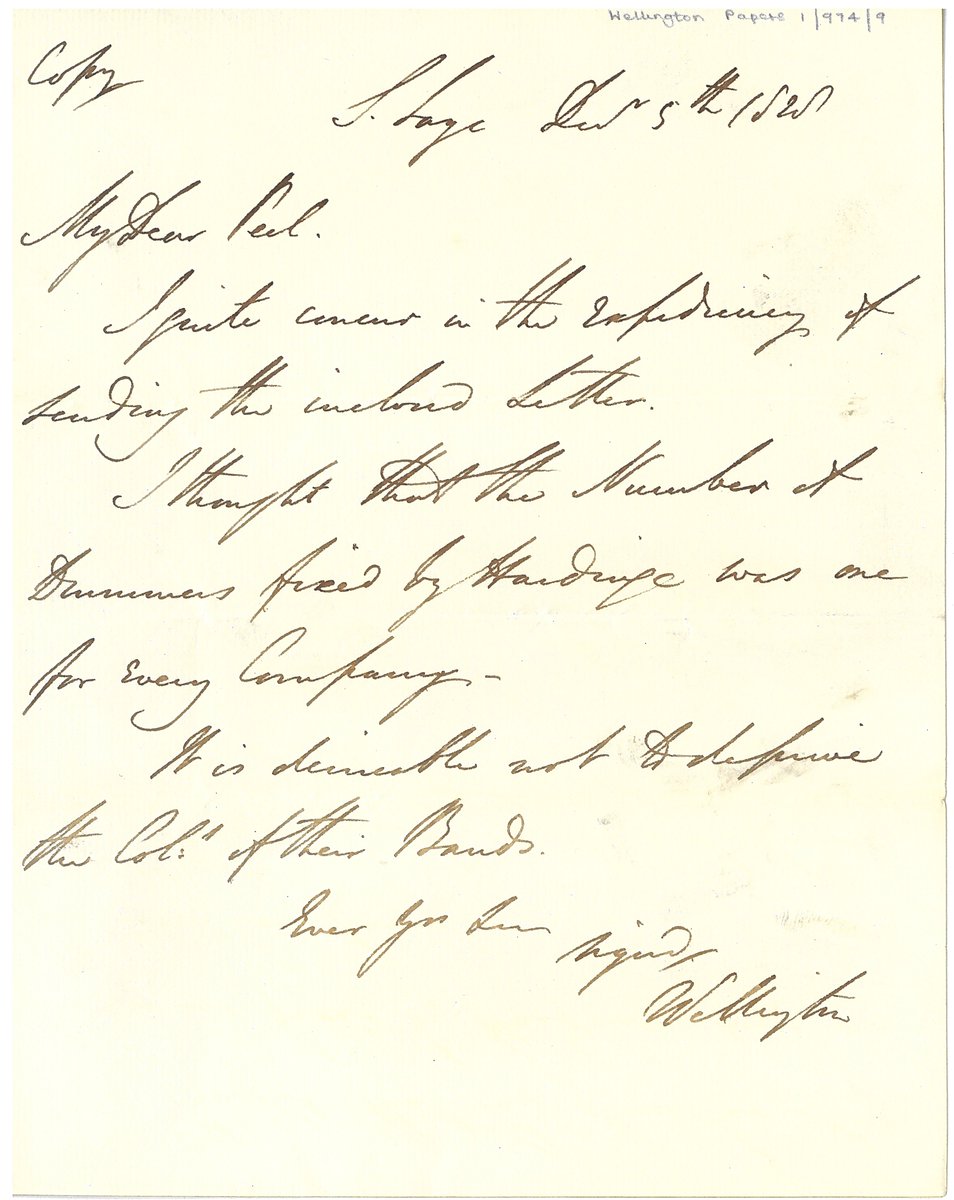
Recently I was asked by the Hartley Library Archives to nominate a favourite document from the Wellington Papers in honour of the 40th anniversary of their arrival at the University of Southampton.
The document I selected dates from 5 December 1828 during Wellington’s first tenure as prime minister. In the letter, Wellington discusses reductions to the permanent staff of militia regiments, which had been retained following the Napoleonic Wars to expedite training and reorganisation in the event of future conflict or civil disorder. I chose this item because of its connection to my research on military music, encapsulated in what might at first seem a curious aside: ‘It is desireable [sic] not to deprive the colonels of their bands.’
Wellington’s wish to safeguard military musicians amid cost-cutting measures illustrates not only his unwillingness to offend the militia colonels – politically influential figures who often sat in parliament – but also the importance that these commanders placed on regimental bands. This predilection did not go unnoticed by critics, with one radical MP complaining in 1822 that ‘one-half of the money appropriated for maintaining [the post-war militia] was spent in drums, fifes, and music’. While this figure appears to be an exaggeration, it was not unusual for one-third of militia cadres to be employed as drummers and band musicians. These regimental performers remained acutely audible in civilian settings in the decades after Waterloo. Besides enlivening the country houses of their colonels, they staged free open-air concerts for socially diverse audiences and appeared at elections, balls, fairs, and other public events in a constellation of county towns. Recalling his youth in Richmond, North Yorkshire in the 1820s and 1830s, Matthew Bell described the expert militia band as a ‘very popular’ source of free entertainment for poorer townspeople and claimed it aroused ‘a slumbering talent for music in some of those who heard its martial and inspiring strains.’
A preoccupation with regimental bands was not solely the preserve of a largely inactive force like the post-1815 militia. Indeed, the wartime military’s keen cultivation of music was also widely acknowledged. A former inspector of army hospitals, for example, observed in 1804 that martial music ‘occupies much of the attention of military persons’, with ‘trumpets, clarinets, serpents, tambours, tambourines, &c. bearing, in some corps, a high proportion to the firelocks’. Wellington himself, the son of a composer, was known to be a musical aficionado, while many other army officers invested heavily in their regimental ensembles, regarding them as valuable social amenities, sources of unit prestige, and essential to military morale. Officers also commonly learned to play instruments such as the violin or flute as a genteel accomplishment. There were, however, some limits to the Iron Duke’s musical patronage. On taking charge of the Royal Horse Guards (The Blues) in 1813, he decided to downsize the regimental band. The musicians were popular with the corps and Princess Charlotte but cost more than £900 a year – an eye-watering sum which had largely been borne by Wellington’s predecessor, the Duke of Northumberland.
WP1/974/9: Copy of a letter from Arthur Wellesley, first Duke of Wellington, to Robert Peel approving the letter on the reduction of the staff of the militia, 5 December 1828: contemporary copy
Copy, in the hand of a secretary, of a letter from Arthur Wellesley, first Duke of Wellington, Stratfield Saye, Hampshire, to Robert Peel, [Secretary of State for Home Affairs]: the Duke agrees with the expediency of sending the letter on the reduction of staff in the militia. The number of drummers fixed by Hardinge was one for every company. “It is desireable not to deprive the colonels of their bands.’
I will be presenting at the Institute for Historical Research’s Long Eighteenth Century seminar on Wednesday, 11 January 2023. The talk, entitled ‘Military Music and Society during the French Wars, 1793-1815’, will take place in Room C3.09 of University College London’s Institute of Education (20 Bedford Way) at 5.30pm. All are welcome to attend in person or register to watch remotely on Zoom via the IHR website (click here).
Synopsis: ‘The French Wars were experienced by the ears as much as the eyes, yet the aural dimensions of these conflicts have received relatively limited attention from historians. This paper interrogates the reach and reception of military music in wartime Britain and Ireland by drawing on a wealth of evidence from memoirs, diaries, press reports, and archival research. It demonstrates that regimental bands provided sought-after entertainment in provincial and garrison towns, playing not only at military parades but at myriad public events including balls and dinners, civic processions, concerts, and church services. Martial music-making, moreover, was regarded as a potent form of cultural propaganda: a means of inculcating patriotism, intimidating political dissenters, and asserting the sonic supremacy of the established order in a revolutionary age. The performances of drummers and regimental bandsmen certainly enjoyed considerable popularity across society and evoked a variety of affective responses, including national pride and fond feelings towards the military. Yet martial music also provoked irritation, controversy, and distress, not least by generating noise complaints, violating the sanctity of the Sabbath, and exacerbating sectarianism in Ireland through the performance of so-called party tunes. The paper concludes by considering the role of military music in overseas colonies and foreign theatres, arguing that it functioned as a form of soft power, helping legitimise imperial authority, aiding diplomacy, and easing relations with local inhabitants. An intrusive symptom of large-scale military mobilisation, martial music shaped civilian attitudes and soundscapes while profoundly influencing the development of wider musical culture.’
Tom and Jerry and Logic making the most of an Evening at Vauxhall (1821)
I look forward to charing a panel discussion on the impact of war on Britain and Ireland between 1688 and 1815 on Monday 12 December at 5pm GMT. This free online event is sponsored by the National Army Museum and the Cambridge Centre for Geopolitics.
The discussion will be also recorded and subsequently shared online for those unable to join live.
Event Summary:
The long eighteenth century was in many respects defined by war. Britain and Ireland were involved in major armed conflicts for nearly half the era; a preponderance of state spending was devoted to preparing for and prosecuting hostilities. This event brings together leading historians to consider the impact of armed conflict and military service on politics, government, and society in light of the latest research. How were the lives of soldiers and civilians altered and disrupted by conflict? What role did the army play in political debates and social change? Did soldiering and the demands of war forge a sense of shared patriotism or exacerbate tensions between disparate communities? Encompassing the Revolution of 1688 to the Napoleonic Wars, the discussion will consider the deployment and duties of soldiers across Britain and Ireland and examine differing attitudes to their presence. The panelists will also examine whether the nature of war and the army’s reputation evolved over time and reflect on the legacies of eighteenth-century wars in the present.
Panel:
Professor Stephen Conway (University College London) is a historian of eighteenth-century war and society. His books include The British Isles and the War of American Independence (Oxford, 2000) and War, State and Society in Mid-Eighteenth-Century Britain and Ireland (Oxford, 2006).
Dr Catriona Kennedy, a senior lecturer at the University of York, researches the cultural history of war, politics, gender and national identity. Her publications include Narratives of the Revolutionary and Napoleonic Wars: Military and Civilian Experience in Britain and Ireland (Basingstoke, 2013).
Dr Hannah Smith, an associate professor at the University of Oxford, works on the history of political culture and gender. She has recently published Armies and Political Change in Britain, 1660-1750 (Oxford University Press, 2021).
Chair: Eamonn O’Keeffe, the National Army Museum Junior Research Fellow at Queens’ College, Cambridge.
UPDATE: A recording of the event is now available online.
This past week I started work at the University of Cambridge (Queens’ College) as a Junior Research Fellow in the History of the British Army. I am affiliated with the Cambridge Centre for Geopolitics and the National Army Museum, which has generously sponsored my three-year fellowship.
Last month I submitted my DPhil thesis on military music during the French Revolutionary and Napoleonic Wars and look forward to the viva (oral examination) later this year.
In my new role, I plan on working towards the publication of my thesis while also pursuing a number of other research projects, including an examination of attitudes towards duelling and honour among army officers. I look forward to contributing to the public programming of the Centre for Geopolitics and the National Army Museum, thereby helping deepen understanding of the relationship between the military and society in the long eighteenth century.
I am in the final weeks of drafting and revising my DPhil thesis before submission here in Oxford – an exciting but at times gruelling experience! I am very much looking forward to completing this project and moving on to a new job in the autumn.
In late July I presented remotely at the biennial conference of the North American British Music Studies Association in Illinois. I was pleased to learn recently that I was recognised as runner-up for the Nicholas Temperley Student Paper Prize.
The judges made the following kind comments about my presentation, which was entitled ‘Diligence, Discipline, and Time: Training Military Musicians during the French Revolutionary and Napoleonic Wars’ and was based on material from one of my thesis chapters.
“Eamonn’s paper was an impressive piece of historical research. He consulted memoirs, newspaper write-ups, and extensive archival research to develop and support an argument that essentially turns previous research on its head, challenging the established view of the Georgian military’s instrumental instruction as disorganized and incompetent. He argues cogently that this characterization is far from accurate, and that not only were the military’s efforts efficient and comprehensive, but in several respects they anticipated curricular developments in the civilian music professions.”
I heartily congratulate Devon Borowski, who won this year’s Temperley Prize with a paper entitled ‘Music Notes, Planter History: Colonial Networks of Song in Eighteenth-Century British Musicology’.







 1812 and all that