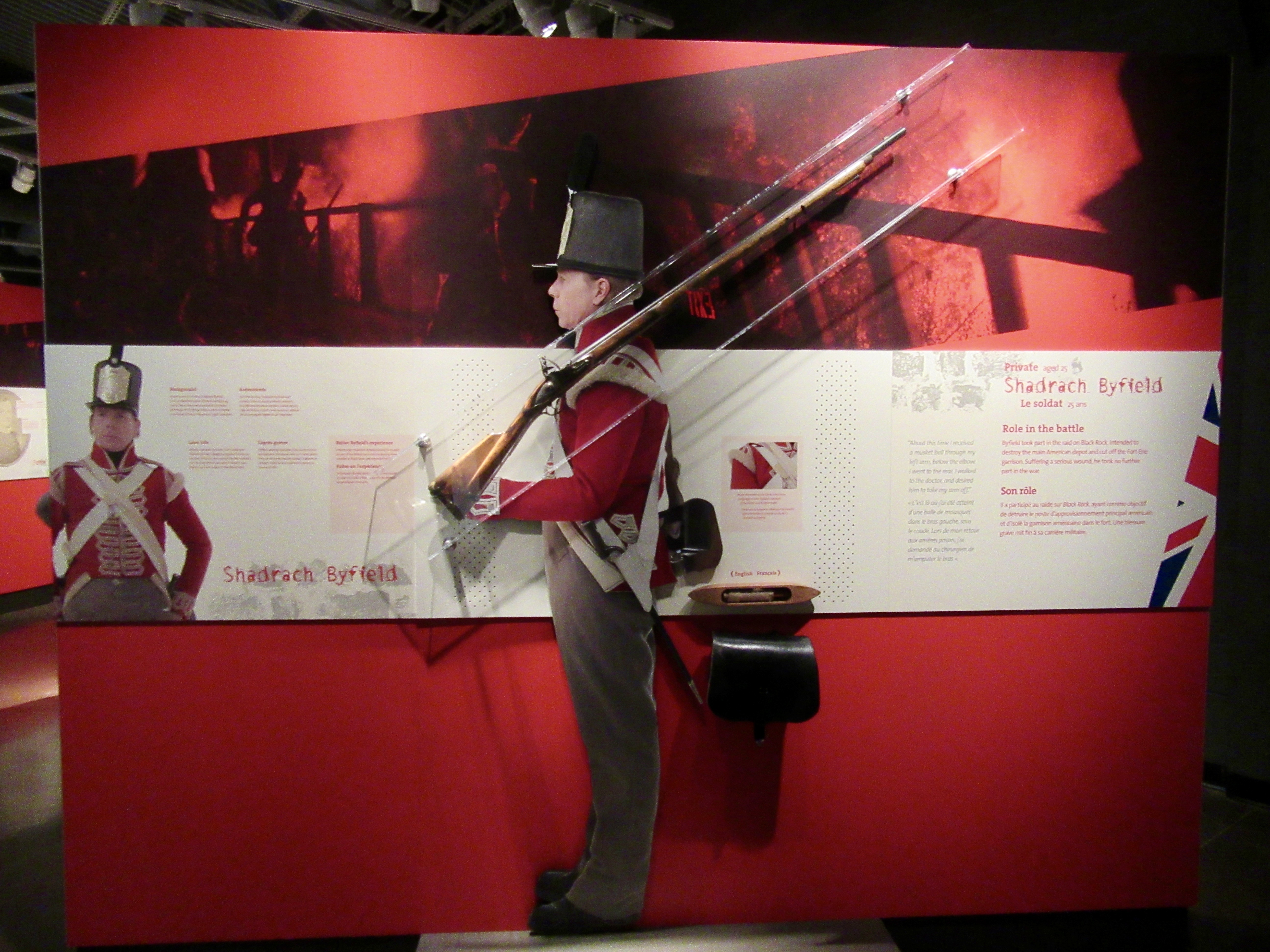
Private Shadrack Byfield’s rare rank-and-file memoir of the War of 1812 has made him a recurring character in history books, television documentaries, and museum exhibits on both sides of the US-Canadian border. My research on this English veteran – a war amputee who buried his own severed arm, designed a custom prosthesis, and went on to write multiple autobiographies – was published in the Journal of British Studies in January 2026. The article, “From Amputee to Author”, is freely available on the JBS website. This publication represents the culmination of a decade of intermittent detective work into the colourful life of a remarkable and very strong-willed individual. Besides documenting Byfield’s experiences, it uses the veteran’s story as a means of thinking more broadly about disability, veterans, and military autobiography in nineteenth-century Britain.
A transcription of Byfield’s newly-identified second memoir, History and Conversion of a British Soldier (1851), is now publicly available through the University of Cambridge’s Apollo research repository. This volume reproduces Byfield’s earlier military reminiscences alongside a new account of his postwar life, which sits firmly within the genre of the conversion narrative. A scan of the veteran’s first autobiography, A Narrative of a Light Company Soldier’s Service (1840), can also be downloaded here.

Summary of “From Amputee to Author: Shadrack Byfield and the Making of a War of 1812 Veteran”
The memoir of Shadrack Byfield, an English weaver and war amputee, occupies a privileged place in the historiography and public memory of the Anglo‑American War of 1812. Yet relatively little is known about the author of this rare rank-and-file account. Drawing on extensive archival research and a newly discovered second autobiography, this article challenges the familiar image of Byfield as a plainspoken exemplar of military stoicism. It reveals how war in North America transformed the former private soldier both physically and psychologically. Examining Byfield’s return to civilian life, the article highlights his tenacious pursuit of veterans’ benefits, his cultivation of influential patrons, and his invention of a prosthetic device to enable a resumption of weaving work. It also traces the ex‑serviceman’s path to publication and explores his shifting self‑presentation in print—first as a dutiful soldier and later as a redeemed sinner. Integrating scholarship on disability, memoirs, military welfare, and the history of emotions, the article argues that Byfield’s exceptionally well‑documented life offers a window into the wider experiences of Britain’s homecoming soldiers after the Napoleonic Wars.
 1812 and all that